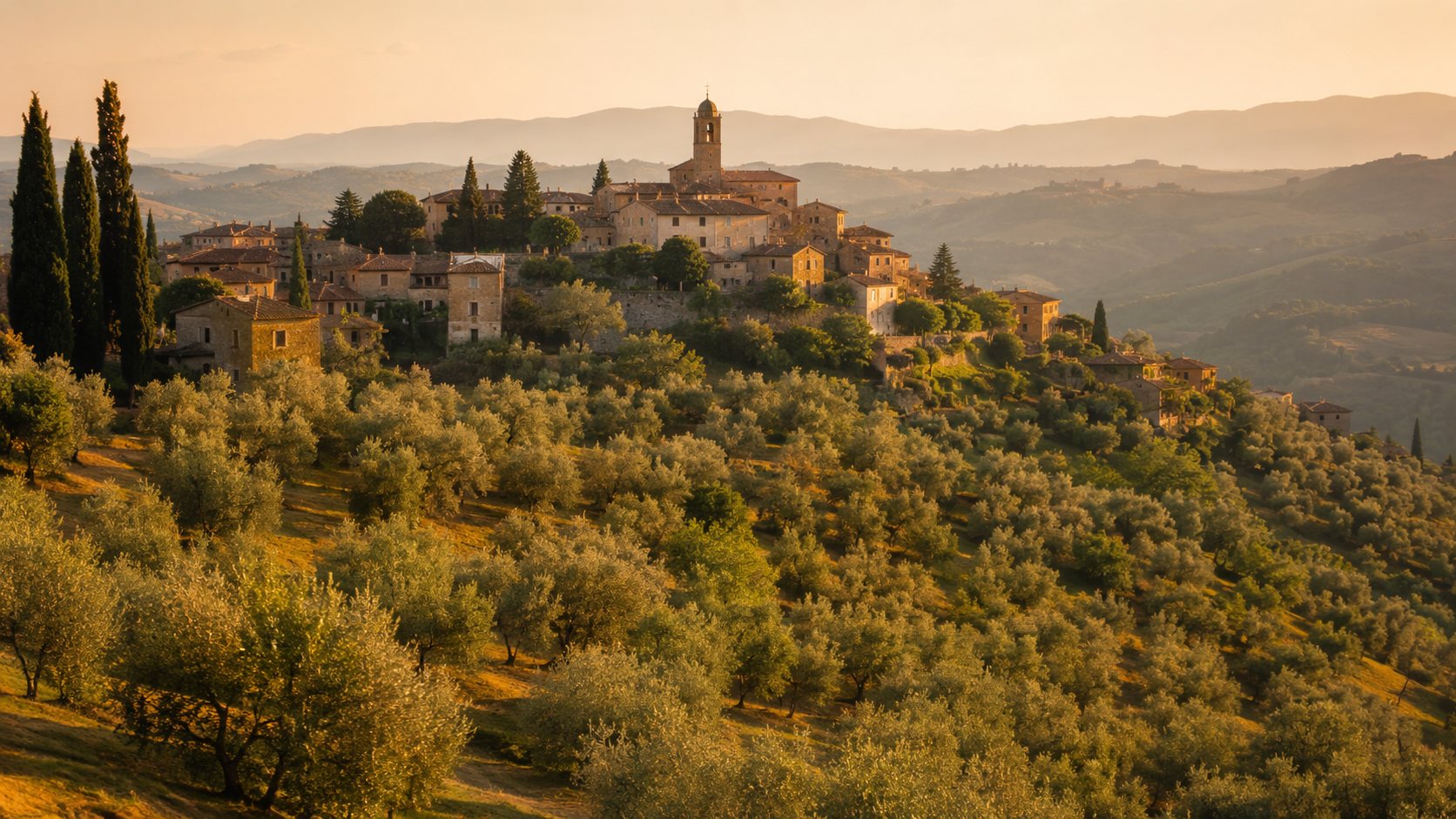
Rome and its surrounding region offer two property markets that could hardly be more different: a dense, historic-centre apartment in the capital, and a stone farmhouse an hour or two out in the green hills of Sabina or Tuscia. This guide sits alongside our overview on buying property in Rome and Lazio, and looks at what each market really asks of a foreign buyer. Scalini is an independent, buyer-side firm: we are not an estate agent, lawyer, notary or surveyor, and the notes below are general guidance rather than advice on any single property.
WHAT TO CHECK FIRST
- Condominio papers: read the regolamento di condominio and the last few meeting minutes before you commit.
- Plans match reality: confirm the catasto drawings reflect the actual layout, with no abuso edilizio.
- Heritage limits: check whether a vincolo restricts what you can change in a protected building.
- Rural access and utilities: in the country, confirm legal access and connected water, power and drainage.
- Land included: verify exactly which parcels and any servitù come with a farmhouse.
- Short-let rules: if income is the plan, check the CIN code and local limits before you buy.
Two markets, one region
A buyer drawn to Rome usually has one of two pictures in mind. The first is a flat behind an ochre facade in Trastevere, Monti or Prati, walkable to everything, but governed by neighbours, shared budgets and heritage rules. The second is a quieter, cheaper life in the countryside: a casale with olive trees in the Sabina, or a tufa-stone house among the lakes and Etruscan towns of Tuscia, north of the capital. The two demand very different checks. An apartment is largely about people and paperwork; a farmhouse is about land, access and what is actually connected. Knowing which you are really buying shapes everything that follows.
Buying an apartment: you are buying into a condominio
Almost every flat in central Rome sits inside a condominio, the shared legal structure that owns the building's common parts and splits the cost of running them. When you buy, you inherit a share of that arrangement, so the building's finances become yours too. Ask for the regolamento di condominio, the rulebook that governs what owners may and may not do, and read the minutes of recent owners' meetings. Those minutes are where you find the real story: agreed but unpaid works, a leaking roof under discussion, arrears from other owners, and the monthly charges you will actually pay.
The minutes also reveal limits on short lets. Some buildings have voted to restrict or ban holiday rentals, which matters enormously if income is part of your plan. None of this is hidden, but it is rarely volunteered in a listing, and it is exactly the sort of document an English-speaking buyer can struggle to read in time. Commissioning an independent buyer-side check before you sign the preliminary contract is the point at which problems are cheapest to walk away from.
Heritage constraints in a protected building
Much of Rome's historic centre is protected, and many individual buildings carry a vincolo, a binding constraint registered with the heritage authorities. A vincolo can limit what you change inside as well as outside: original floors, frescoed ceilings, staircases and facades may all be off-limits to alteration without permission. This is not a reason to avoid period property, but it does mean a renovation budget can be shaped by the authorities rather than by you, and approvals take time. Establish what the constraint actually covers before you assume a flat can be reconfigured.
Catasto accuracy and unpermitted work
Old buildings accumulate changes, and not all of them were declared. The catasto holds the registered plan of each unit, and it should match what you walk through: the same rooms, the same walls, the same use. Where a previous owner moved a wall, enclosed a balcony or split a flat without permits, you have an abuso edilizio, an unpermitted work that can block the sale, complicate the mortgage, or land in the new owner's lap. Closely related is agibilità, the certificate confirming a property is fit for habitation. These are technical questions for a surveyor and a notary, and our trusted network of independent Italian professionals is built precisely so that the person checking the building is not the person selling it.
The Lazio countryside: Sabina and Tuscia
Drive north or east out of Rome and prices fall while plots grow. The Sabina, famous for its olive oil, and Tuscia, the old Etruscan heartland around Viterbo and the lakes, both offer stone farmhouses at a fraction of central-Rome figures. The trade-off is a different, more rural checklist. Confirm there is legal access to the property: a track that crosses a neighbour's field needs a registered right of way, a servitù, rather than a friendly understanding. Check that water, electricity and drainage are genuinely connected and legal, since many country houses rely on wells, septic systems or shared springs that come with their own paperwork.
Be precise, too, about what land is included. A casale is often sold with several catasto parcels, and the olive grove you fell in love with may or may not be among them. Agricultural land can carry its own rules and, occasionally, a neighbour's pre-emption right. None of this is exotic; it is simply the rural equivalent of reading the condominio papers, and it rewards the same patient verification.
Short lets and the CIN code
If you intend to let a Rome flat to visitors, the regulatory ground has shifted. Italy now requires a national identification code, the CIN, displayed on every short-let listing, alongside local rules and safety requirements that Rome applies on top. We cover the wider tightening, sometimes called the Airbnb crackdown, in our piece on the CIN code and short-let regulation. The practical message is to confirm both the building's own restrictions and the city's rules before you count on rental income, not after.
Getting there
Access is part of the value, especially for a holiday or part-time home. Rome is served by Fiumicino for long-haul and most international flights, and by Ciampino for many low-cost routes, with frequent connections from the UK and good links onward by train and motorway. A Sabina or Tuscia house typically sits within a one-to-two-hour drive of those airports, which keeps a country base genuinely usable for shorter stays rather than only for the long summer.
Frequently asked questions
Are running costs higher in a central Rome apartment?
They can be. A condominio charges each owner a share of cleaning, lifts, stairwell maintenance and any agreed major works, and historic buildings tend to cost more to maintain. The recent meeting minutes are the most honest guide to what you will actually pay and to works already in the pipeline.
Can I freely renovate a period flat in the historic centre?
Not always. A vincolo can protect interiors as well as facades, and the regolamento di condominio may add its own limits. Check what is protected and what the building permits before you assume a layout can change, and budget for approval timelines.
What is the single biggest risk with a countryside farmhouse?
Usually access and services. A house with no registered right of way, or with water and drainage that are not legally connected, can be far harder to use, insure or resell. Verify the servitù, the utilities and exactly which land is included before committing.
Sources & further reading