
Buying property in Puglia, with your eyes open.
Puglia's charm is real: trulli, whitewashed towns, masserie and olive groves to the horizon. So is the rise in foreign demand. The charm hides specifics: heritage planning on trulli, the scale of a masseria restoration, the land itself, and a market that moves with the tourist season.
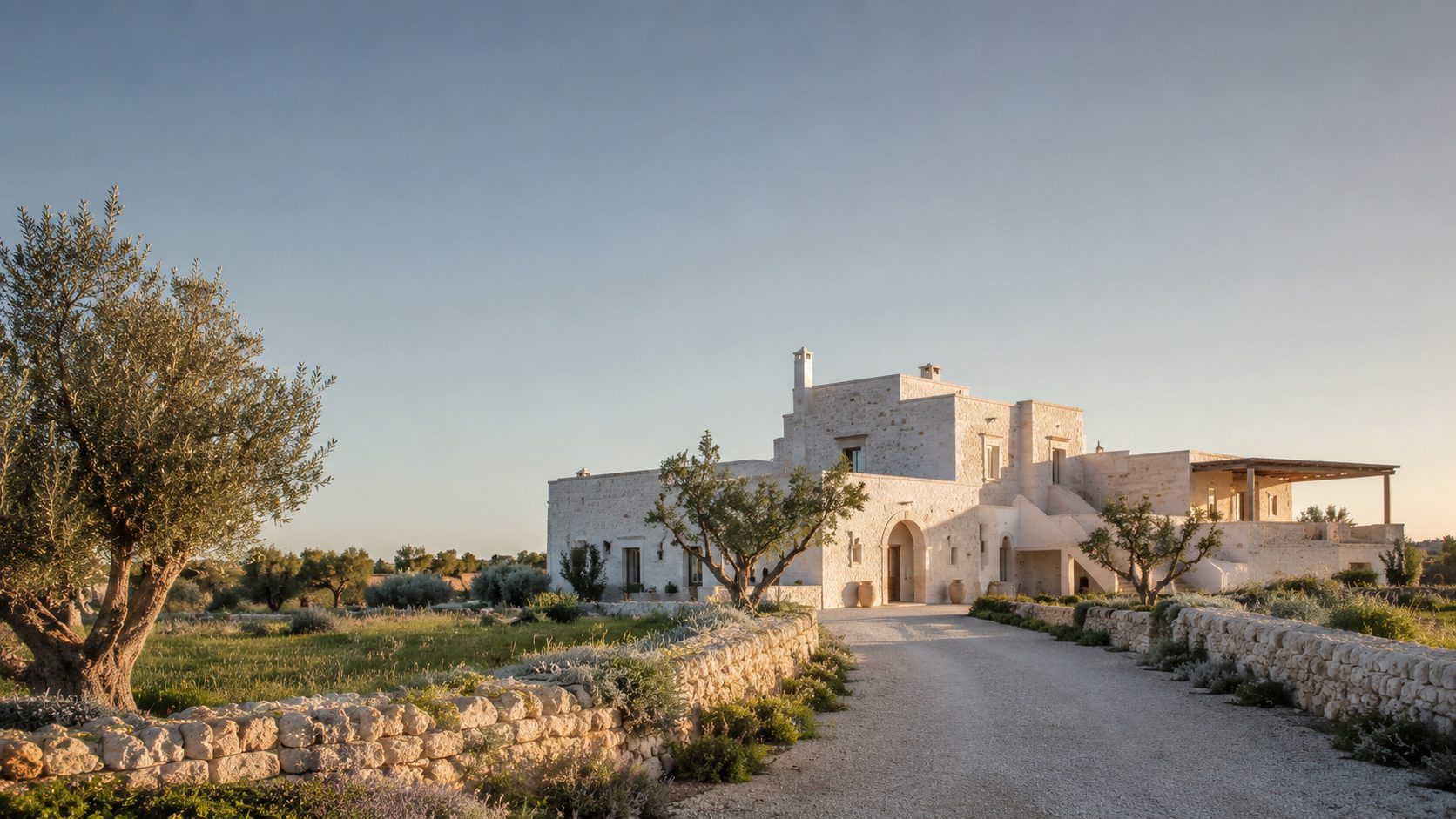
The Puglia-specific risks
- Trulli constraints: conical-roofed buildings carry heritage rules, and informal extensions are a common source of abusi.
- Masseria scale: a fortified farmhouse is a serious restoration project, with budgets and timelines to match.
- Land and olive groves: ownership, access and the health of the trees, in a region affected by xylella.
- Water and access: wells, cisterne and unmade roads that need checking in the deeds.
- Tourist-rental seasonality: strong summers, quiet winters, and the rental rules that go with it.
Salento, Valle d'Itria or the coast?
The whitewashed Salento, the trullo country of the Valle d'Itria and the working towns each offer a very different year. We give you the honest off-season picture before you fall for an August version of a place.
Living in Puglia, not just visiting
Before it is a property decision, a move is a decision about daily life. These are the questions we help you answer about Puglia honestly and year-round, not just how it looks in summer:
- Off-season: mild but windy, and the whitewashed tourist towns and trulli countryside empty out from autumn.
- Access: Bari and Brindisi airports cover Europe; long-haul to the US routes via Rome or Milan.
- Driving: flat and relatively easy to drive, though Lecce, Bari and Ostuni restrict their old centres.
- Services: Bari and Lecce have the main hospitals and services; the Valle d'Itria is more rural.
- Full-time vs second home: Lecce, Ostuni and the larger towns suit full-time living; a trullo in the countryside is often a second home.
Still deciding where to live? A free Scalini assessment takes you by the hand: a step-by-step, custom Italy Move Plan and a shortlist of the places that truly fit, so you settle in the right spot before you buy.
Frequently asked questions
Can foreigners buy a trullo or masseria in Puglia?
Yes. US and UK buyers face no general restriction. The care needed is in the paperwork, not the eligibility: trulli and masserie are often the product of generations of additions, which is exactly where the risks hide.
What is the biggest risk when buying a trullo?
Unpermitted work. A restored trullo's quoted floor area frequently exceeds its registered catasto plan, an enclosed veranda or extension that may never have been permitted. The Itria Valley also carries landscape and heritage constraints, so "we'll sort the paperwork later" is riskier than it sounds.
Do country properties in Puglia have water and legal access?
Not always. Many rely on cisterns, wells or water deliveries rather than mains supply, and access can run across a neighbour's land on goodwill alone. Confirm utilities and a registered right of way before you commit.
Does Xylella affect buying property with olive trees?
It can. The Xylella bacterium has affected olive groves across parts of Puglia. If land value or the setting depends on mature olives, it is worth understanding the local situation and the condition of the trees before you pay for them.
Found a property? Let's check it before you commit.
Share the listing and we'll tell you which level of check fits, from a 390 euro Property Check upward.
 ScaliniPRIVATE RELOCATION OFFICE