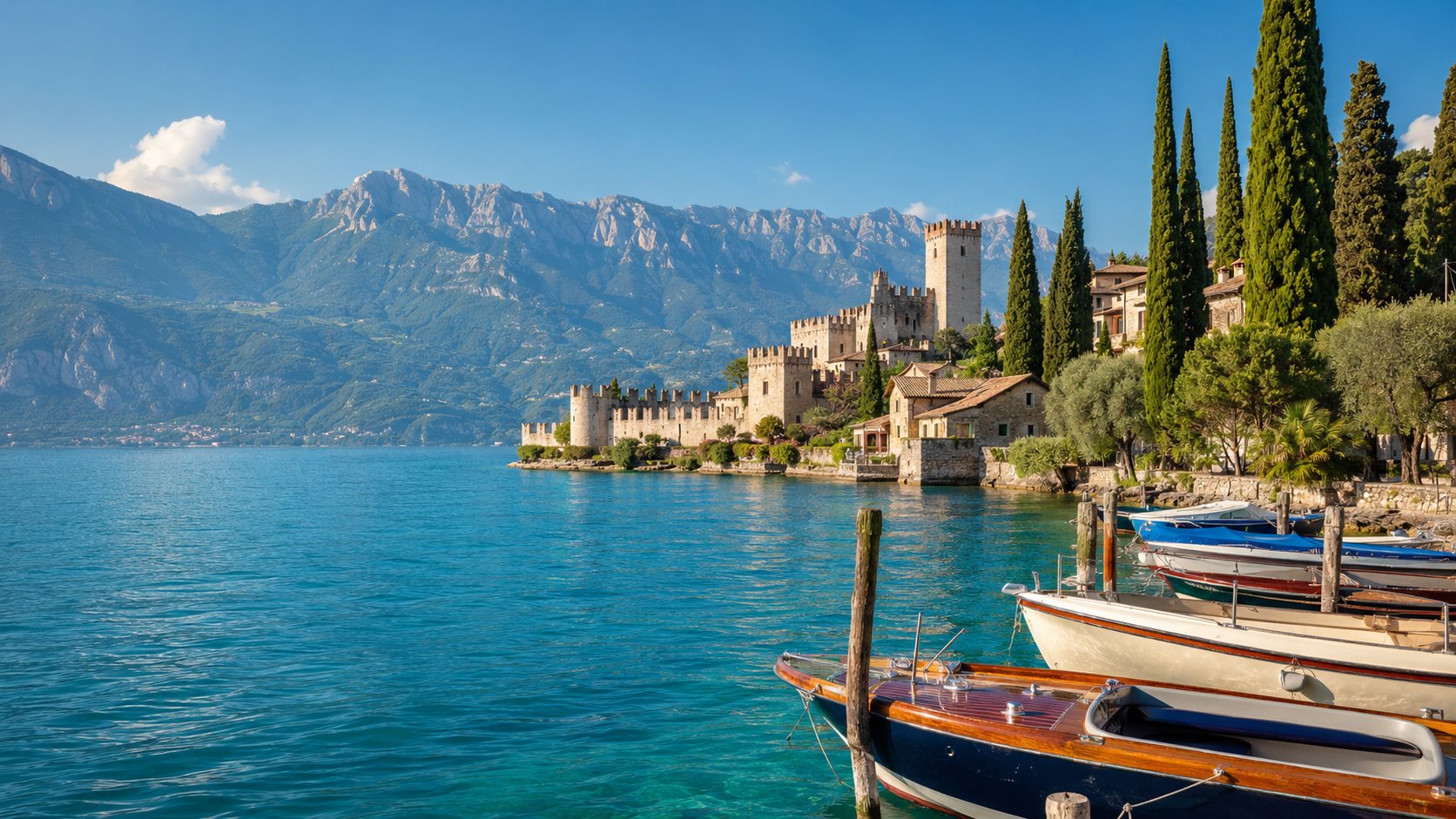
Lake Garda is Italy's largest lake, and it is really three markets wearing one name. The water is bordered by three regions, and the rules that matter to you change as you move around the shore. If you are buying property on Lake Garda, the headline view sells the dream, but the questions that protect you are quieter ones: where does your land actually stop, is that mooring yours or the State's, and does the comune agree with what the listing implies. This guide sets out what foreign buyers should verify before they commit.
WHAT TO CHECK FIRST
- Boundary: whether the property genuinely reaches the water, on the cadastral map, not just in the photographs.
- Mooring: whether any dock or jetty sits on State shoreline under a concessione demaniale, and the term, fee and transfer terms.
- Region and comune: which side of the lake you are on, and that local planning and short-let rules are confirmed there.
- Planning: that what is built matches what is approved, with no unresolved abuso edilizio.
- Landscape: whether a vincolo paesaggistico governs changes to the building or grounds.
- Income plan: if you intend to let, that short-let rules and the CIN code position are clear.
Lake view is not lakefront: verify the boundary
The single most expensive misunderstanding on Garda is the gap between a lake view and lake frontage. Many homes on the slopes look directly over the water but are separated from it by a road, a public path or a strip of land in someone else's name. Frontage carries a real premium, so it is exactly the claim worth testing. Ask to see the parcel on the catasto map and compare its boundary with the actual shoreline. Check whether a servitù di passaggio, a right of way, crosses the land between the house and the water, because a neighbour's or the public's right to pass can sit on ground you assumed was private. The cadastral position, not the estate agent's description, is what you are buying.
Moorings and docks: often the State's, not yours
A private berth is part of the Garda fantasy, and it is the area where ownership is most often misread. The lakebed and much of the shoreline are public maritime-style domain, so a jetty, dock or boat mooring frequently sits on State land held under a concessione demaniale: a time-limited concession, not freehold. That distinction matters in several ways. The concession runs for a fixed term and must be renewed; it carries an annual fee; and it does not always transfer cleanly to a new owner simply because the house changes hands. Before you value a mooring as an asset, confirm it exists as a current, valid concession, who holds it, when it expires, what it costs, and whether it can be transferred to you. Treat "with private mooring" as a question, not a fact.
Three regions, three markets
Garda is touched by Lombardy on the western Brescia side, Veneto on the eastern Verona side, and Trentino at the northern tip. These are not cosmetic distinctions. Planning rules, mooring administration and short-let regulation are set regionally and locally, so a given comune on the Brescia shore can treat extensions, rental registration or shoreline works differently from a comune near Verona or in the Trentino north, where the windier upper lake also shapes a distinct sailing and watersports market. The practical lesson: do not generalise from one town to another. Verify the rules in the specific comune your property sits in. If you are weighing Garda against another lake, the same caution applies when buying on Lake Como, where local variation is just as real.
Planning and abuso edilizio
Italian homes are often altered over decades, and lake properties with terraces, garden rooms, pool houses and converted outbuildings are prime candidates for work that was never fully regularised. An abuso edilizio, a building irregularity, can range from a closed-in loggia to an entire unpermitted structure, and it can complicate resale, financing and any future renovation. The check is straightforward in principle: compare the approved plans held by the comune with what physically stands on site, and confirm that occupancy and habitability documents are in order. This is technical ground for a qualified geometra or surveyor, and it is precisely where an independent buyer-side check earns its place: reading what is really being sold before the deposit is paid.
The landscape constraint
Much of the Garda shoreline carries a vincolo paesaggistico, a landscape protection that restricts what you may change to the building's external appearance and the grounds. That can affect rebuilding a boathouse, altering a facade, removing mature trees or installing a pool. A vincolo does not make a property a poor buy, but it does mean any renovation plan needs prior authorisation, which takes time and is not guaranteed. If your purchase rests on a specific improvement, confirm whether the constraint applies and what it permits before you rely on the plan.
Short lets and tourism income
Garda is one of Italy's busiest tourist lakes, and many buyers intend to offset costs with holiday rentals. If income is part of your plan, treat the regulatory side as a condition of the purchase, not an afterthought. Short-term lets in Italy now require a national identification code, the CIN, which must be obtained and displayed, alongside any regional registration and local tourist-tax obligations that vary by comune. Confirm that the property can legally be let short-term in its location, and that there are no condominium or planning restrictions against it. A unit that cannot be registered is worth less to a buyer whose case rests on rental yield.
Which towns, and getting there
The southern towns such as Sirmione, Desenzano, Peschiera and Bardolino are the most accessible and the most touristed; the central western shore around Salo and Gardone offers grander villas; the north around Riva and Malcesine is dramatic and watersports-led. Access shapes both lifestyle and lettability: Verona and Brescia airports are closest, with Bergamo and Milan within practical reach, and the Milan to Venice rail line runs along the south. Where you buy should match how often you will travel and whether guests need easy arrival.
Frequently asked questions
Can a foreigner buy property on Lake Garda?
Yes. US and UK buyers can purchase freely in Italy under reciprocity, and the process runs through an Italian notary, the notaio, who handles the public deed. The notary's role is to formalise the sale, not to advise you on whether it is a good buy, which is why independent pre-purchase due diligence matters.
Does buying a lakefront house include the mooring?
Not automatically. A dock or mooring frequently sits on State shoreline under a concessione demaniale rather than being owned with the house. Always verify the concession's holder, term, fee and whether it transfers to you before treating the berth as part of the asset.
Should I use the same checks across the whole lake?
No. Because three regions and many separate comuni govern Garda, planning, mooring and rental rules differ from town to town. Verify the position in the specific comune, ideally with a trusted network of independent Italian professionals who know that local administration.
Sources & further reading