
REGIONS
Buying on Lake Como: what to verify before you sign
Lakefront vs lake view, moorings and State concessions, access on steep plots, and where the famous-name premium really sits.
By the Scalini Group team | 27 Jun 2026 | 11 min read
REGIONS
Lakefront vs lake view, moorings and State concessions, access on steep plots, and where the famous-name premium really sits.
By the Scalini Group team | 27 Jun 2026 | 11 min read
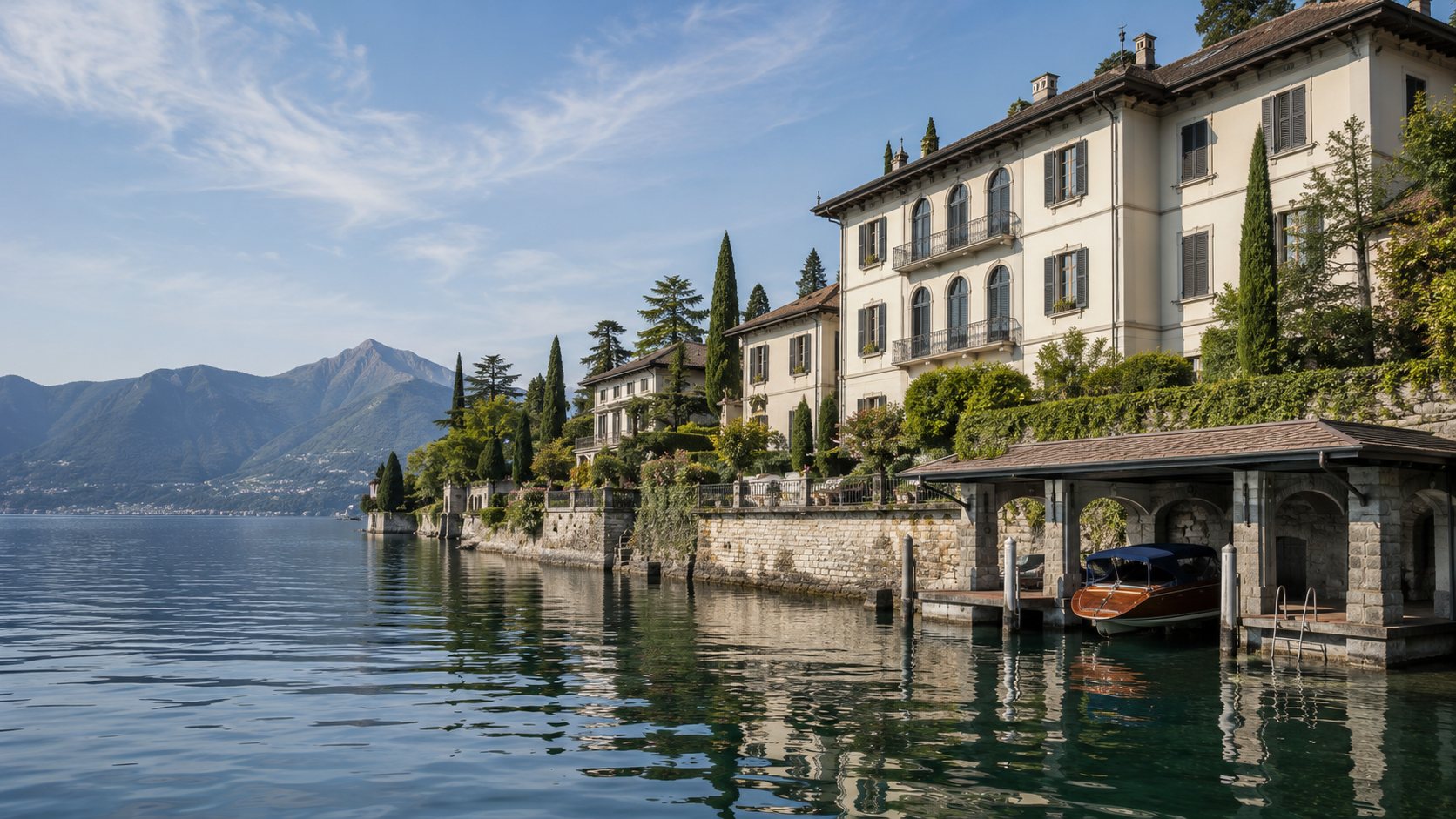
Lake Como rewards patience. The water, the light and the old villas are genuinely special, and that specialness is priced in. Foreign buyers, mostly American and British, often arrive with a clear picture of a lakefront villa with a private dock, then discover that the supply is thin, the premium is real, and the words used in listings do not always mean what they seem. Scalini Group is not an estate agent, lawyer, notary or surveyor. We give an independent second opinion on what a property really is, what to verify, and who should verify it before you commit. This guide covers the issues that come up most often when buying property on Lake Como.
WHAT TO CHECK FIRST
These two phrases sit close together in listings and far apart in reality. A lake view means you can see the water, which on a steep shore can mean a glimpse over rooftops from an upper window, or a full open panorama. A lakefront property means the land actually meets the water, which is rare and commands the highest premium. Between the two sit many homes described as "a few steps from the lake," where the steps are a long flight of stairs and a road in between.
Verify the view from the rooms you will actually use, in person, and at the time of year you will be there. Check the boundary on the cadastral map (mappa catastale) against what you see on the ground. If the listing implies direct water access, confirm whether the parcel genuinely reaches the shoreline or stops at a public path, a neighbour's strip, or the State-owned lake margin.
A private mooring or boathouse is one of the strongest draws on Como, and one of the most misunderstood. The lake margin and much of the shoreline are State property (demanio). A dock, jetty or boathouse there is very often held under a concession (concessione demaniale), which is a time-limited right to use public land, not outright ownership. Concessions carry annual fees, renewal conditions, and the risk that they are not transferred cleanly with the sale.
Before you attach value to "private mooring," establish:
This is exactly the kind of point where a notary and a local technician should confirm the paperwork. We can flag it early so it does not surprise you at the deed.
Como's shore is mountainous. Many properties are reached by shared lanes, private stairways, or rights of way across a neighbour's land, and gardens are often terraced across parcels that changed hands separately over generations. The result is that access and boundaries are frequently informal in practice and unclear on paper.
Ask how you physically get from the public road to the front door, and whether any part of that route crosses land you will not own. A right of way (servitù di passaggio) should be registered, not merely "always used by everyone." On steep sites, also check retaining walls, drainage and who is responsible for the structures holding the hillside up, because these are expensive and shared responsibilities are easy to dispute.
Many of the grand lakeside villas have been divided into apartments. Buying one unit means buying into a condominium (condominio), with shared ownership of the garden, the shoreline, the lift, the roof and often the dock. That is not a problem in itself, but it changes what you control.
Read the condominium regulation (regolamento di condominio) and the minutes of recent meetings before you fall in love with the terrace. They tell you who may use the garden and the mooring, whether short lets are allowed, what major works are planned, and what the running costs are. A beautiful private-feeling apartment can come with shared rules about the very features that sold you on it.
Older lakeside homes have usually been extended, enclosed or reworked over the decades, sometimes without full permits. An unresolved planning irregularity (abuso edilizio) can block a sale, complicate a mortgage, or pass an obligation to fix it to the new owner. The built reality should match the plans filed with the comune and the cadastre.
Almost the entire Como basin sits under a landscape constraint (vincolo paesaggistico), which protects the look of the lake and its slopes. This affects what you can change: windows, colours, roofs, terraces, even garden structures and the dock can require landscape authorisation. It is not a reason to walk away, but it does mean your renovation plans need checking against the constraint before you assume they are possible. Have a qualified geometra or architetto confirm both the planning history and what the constraint permits.
Even straightforward work costs more and takes longer on Como than buyers expect. Materials may arrive by boat or be carried up stairways. Scaffolding on a slope is awkward, parking for trades is scarce, and landscape authorisation adds time to anything visible from the lake. Budget for the access, not just the building.
If you are weighing a project against a finished home, price the renovation realistically with local input first. The premium for a turnkey lakefront house often reflects exactly how hard it is to do that work yourself here.
Most foreign buyers on Como use the property as a second home rather than moving permanently, and the tax and purchase treatment differs from buying as a resident. The numbers depend on your situation, so confirm them with a notary and a tax adviser rather than assuming the headline figures you read online apply to you.
On access, the practical draw of Como is its closeness to Milan. Milan's two main airports, Malpensa and Linate, plus nearby Bergamo, put the lake within a reasonable transfer for transatlantic and UK travel. The southern towns near Como city and Lecco are quicker to reach; the mid-lake and northern villages are more beautiful and more remote, which matters if you will visit often or let the property when away.
Bellagio, Menaggio, Varenna and the celebrity stretch around Laglio carry a premium for the name as much as the house. A short distance away, often the next village or a slightly higher position, can offer the same view and a calmer market for meaningfully less. If your priorities are the water, the light and a sound building rather than a postcode, widen the search before you stretch the budget. An independent buyer-side check and a network of trusted local professionals help you compare like for like rather than paying for the name on the listing.
Not automatically. Many docks and moorings sit on State-owned shoreline and are held under a concession (concessione demaniale) with fees, an expiry date and transfer conditions. Confirm whether it is owned or a concession, and that it can pass cleanly to you, before you value it.
Usually not freely. The landscape constraint (vincolo paesaggistico) over the lake limits changes visible from the water and may require authorisation for windows, roofs, terraces and the dock. Check what is permitted, and that past works were authorised, before planning a renovation.
Often, yes. The best-known villages carry a premium for the name. A neighbouring village or a position a little above the lake can give a similar view and a quieter market for less. Compare several locations before committing.
Contact us and we'll tell you which level of check is most suitable. Independent, buyer-side, no commission from the sale.
Contact us ScaliniPRIVATE RELOCATION OFFICE