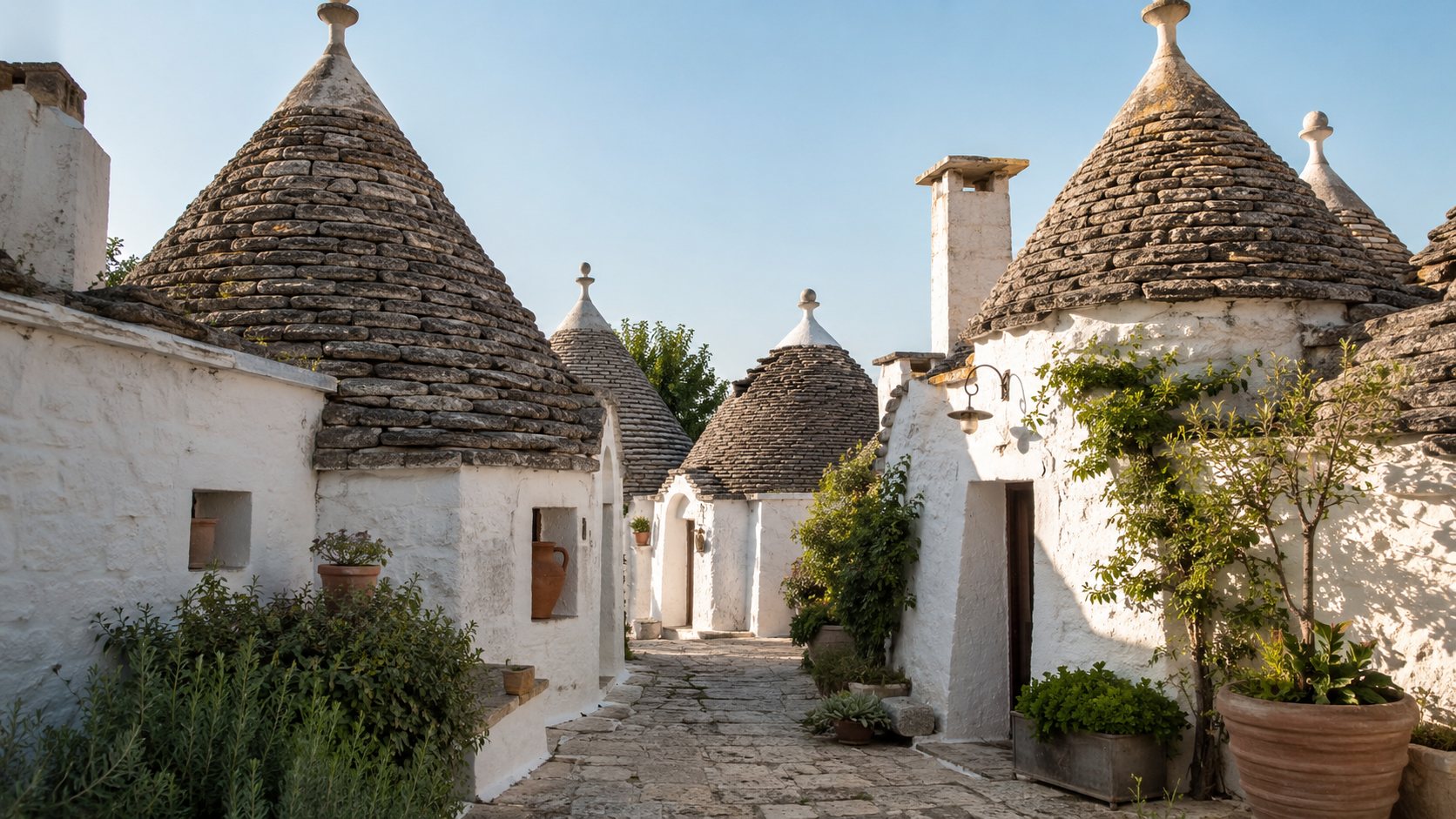
Few places in Italy sell the dream as effortlessly as buying property in Puglia: a conical-roofed trullo in the Itria Valley, a fortified masseria ringed by olive trees, the bleached light of the Salento. The romance is real, but so is the gap between a charming listing and a clean title. This guide explains the specific things that go wrong with country property in Puglia, and who should check each one before you commit.
WHAT TO CHECK FIRST
- Planning: unpermitted works (abusi edilizi) are common on trulli and rural buildings
- Registry match: the catasto plan often differs from what is actually built
- Land & access: agricultural classification and a legal right of way to the property
- Water: mains connection, or a registered well and rights to use it
- Habitability: whether agibilità exists for the dwelling
- Olives: Xylella status of the grove and any replanting limits
Unpermitted building works are the headline risk
Many trulli and masserie were extended, roofed, joined together or converted over decades with little or no formal permission. In Italian law these are abusi edilizi, and they do not disappear because the work is old or because the seller has lived there happily for years. An undeclared extension, a closed-in veranda, a converted stalla or an added bathroom can all sit on the property as a defect that passes to you.
The practical test is simple to state and harder to satisfy: does the building, as it stands today, match the approved planning permissions on file at the Comune? A buyer cannot usually answer that from photographs. This is the single most important reason to commission an independent buyer-side check rather than relying on the agent who is paid to sell the property.
The catasto and the building rarely tell the same story
The catasto (land and buildings registry) holds a plan and a category for each property. With rural Puglian buildings, the registered plan is frequently out of date: rooms that exist on the ground are missing on paper, or floor areas differ. A mismatch between the catasto and reality is not just paperwork. It often points back to works that were never declared, and it can hold up the deed if a notaio notices the gap late in the process.
A qualified geometra is the right person to reconcile the survey, the registry and the planning history. If the seller cannot produce a clean, current set of documents, treat that as a question to answer, not a detail to ignore.
Condono: amnesty is not the same as compliance
Italy has, at various times, offered condono edilizio, a procedure to regularise certain past works for a fee. Sellers sometimes say a property is "in condono", which can mean one of several things: an application was lodged, an application was lodged but never completed, or the works were genuinely regularised. Only the last of these gives you certainty. Ask to see the actual decision, not a receipt for a payment, and have a professional confirm what it covers and what it leaves open.
Agricultural land, access and wells
A masseria usually comes with land, and that land is often classified as agricultural. That classification affects what you can build, how you can change the use of buildings, and sometimes who has a right to buy. Three rural questions deserve particular attention:
- Access. Is there a legally recorded right of way to the property, or do you cross a neighbour's land on goodwill alone? An informal track can become a serious problem the day a relationship sours or land changes hands.
- Water. Many country properties are not on mains water. They rely on a well, a cistern (the traditional cisterna that collects rainwater), or a tanker delivery. A well should be registered and authorised, and you should understand the real, year-round supply, not the supply in a wet spring.
- Boundaries. Rural boundaries are commonly approximate. Confirm that the land you are buying matches the land you are being shown.
Habitability and what agibilità means for you
The agibilità (sometimes abitabilità) is the certificate that a building is fit to be lived in: structurally sound, with adequate services and ventilation. Older trulli and masserie may never have had one, or may have lost it when works were carried out. The absence of agibilità does not always stop a sale, but it matters for mortgages, for short-let registration, and for your own peace of mind. Establish early whether the certificate exists and whether the building as it stands could obtain one.
Olive groves and Xylella
The olive trees are part of why you fell for the place, and they carry their own due diligence. Xylella fastidiosa, the bacterial disease that has devastated groves across the Salento and parts of central Puglia, has reshaped what owners can and must do. Depending on the zone, there can be rules on monitoring, on removing infected trees, and on which species you may replant. A grove that looks healthy in a listing photograph may sit in a containment area with obligations attached. Ask about the zone, the health of the trees, and any duties that come with them.
A sensible order of checks
- Get the full address and catasto references, and confirm exactly what is being sold (buildings and each parcel of land).
- Instruct a geometra to compare the building, the registry plan and the planning permissions held at the Comune.
- Resolve any abuso or condono question in writing before you sign the preliminary contract (compromesso).
- Confirm access rights, water supply and boundaries on the ground.
- Check agibilità and the Xylella position of the grove.
- Let the notaio verify clean title and the absence of mortgages or charges before the deed.
Sequencing matters. The expensive mistakes happen when buyers fall for a property, pay a deposit, and only then discover the work that should have been done first. Lining up trusted local professionals early keeps you in control of the timeline.
The romance, and the logistics
One last practical note. Puglia is large, and the distance from the airports shapes daily life and rental appeal. Bari serves the north and the Itria Valley; Brindisi is closer to much of the Salento. A property that feels remote and idyllic on a summer afternoon can mean a long drive at the end of every trip, and a harder property to let. Weigh the dream against the logistics before, not after, you make an offer.
Frequently asked questions
Can I still buy a trullo that has unpermitted works?
Often yes, but the works need to be understood and, where possible, regularised, and the price should reflect the cost and risk. The danger is buying blind. Have a professional establish exactly what is unpermitted and what it would take to put right before you are committed.
Do I need agibilità to complete the purchase?
Not always. A sale can proceed without it in many cases, but its absence affects financing, legal short-letting and resale. Find out whether the certificate exists and whether the building could realistically obtain one, so you are deciding with full information.
Is Xylella a reason not to buy in the Salento?
Not in itself. It is a reason to check the specific property: the zone it sits in, the condition of the trees, and any monitoring or replanting obligations. Treat the grove as part of the due diligence rather than a free bonus.
Sources & further reading