An illustrative, anonymised composite based on situations we commonly see. Details are for explanation, not a description of a specific client or property.
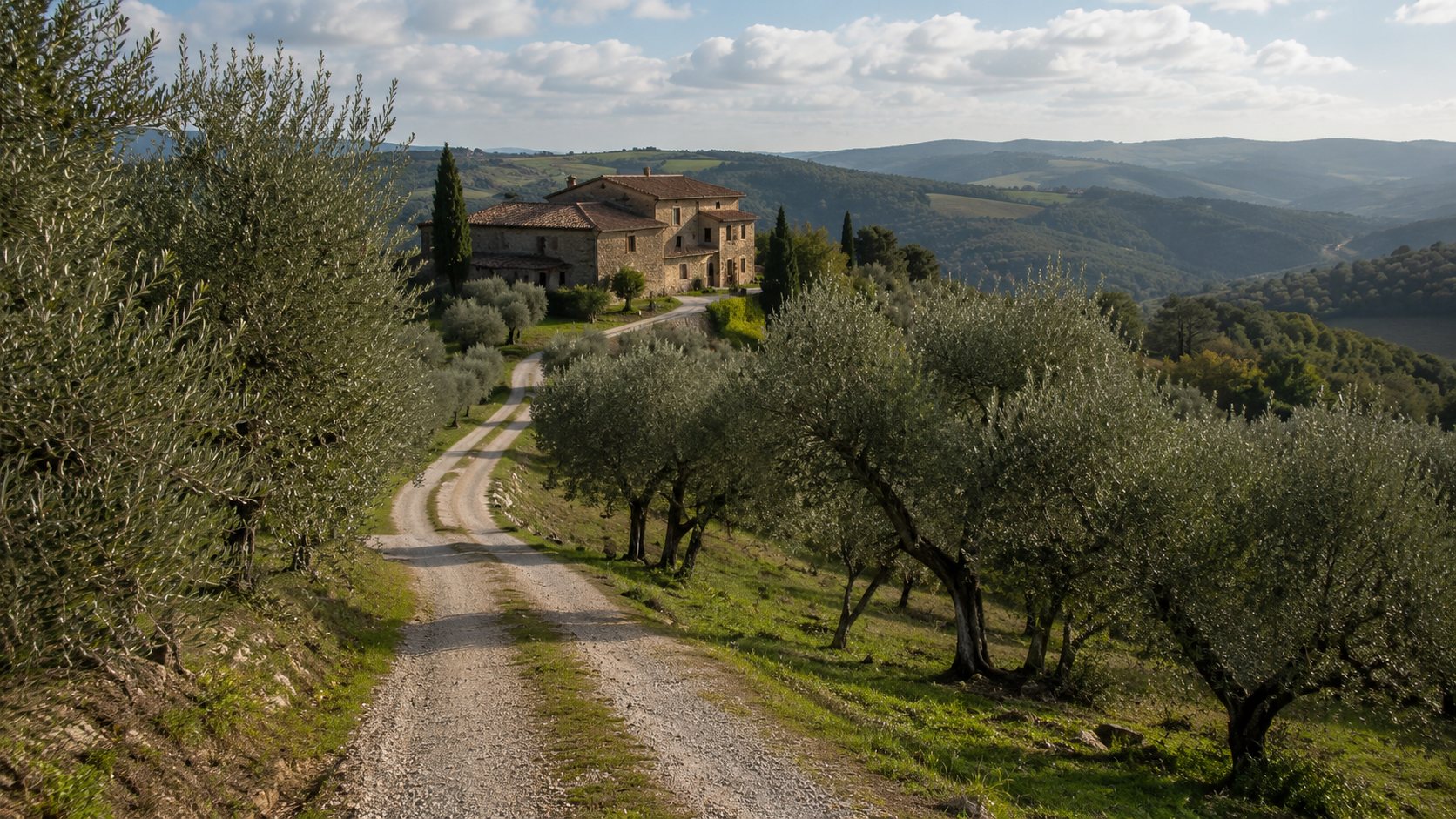
The photographs did most of the selling. A honey-coloured stone casale on a low Tuscan hill, terracotta roof, a long gravel track curving up through silver-leaved olive trees, and a description that promised "the farmhouse with its olive groves and surrounding land". For the buyers, an American couple who had spent two summers looking, it felt like the picture they had been carrying in their heads. They were close to signing the proposta di acquisto, the binding written offer, when they asked us to take an independent look first.
We are not the estate agent, the notaio or the surveyor. We are a buyer-side second opinion: our job is to read what is actually being sold, compare it against what the buyer believes they are getting, and produce a clear list of what must be verified and by whom before any money or signature is committed. In this case the gap between the photographs and the paperwork was wide enough to matter.
THE CASE AT A GLANCE
- Property: A stone casale in the Tuscan hills, marketed "with olive groves and land".
- The red flag: The catasto parcels named in the draft documents were fewer than the land shown in the photos. The access track and the best grove sat on a strip under a separate title.
- What we did: Cross-checked the listing against the cadastral parcel numbers and the official map, then flagged the access and the undocumented right of way as questions to resolve before the proposta.
- Outcome: The buyer paused, asked the right questions through their own licensed professionals, and renegotiated on the basis of what was genuinely included.
The property
On paper the sale was straightforward: one rural building and "the land pertaining to it". The brochure listed a generous hectarage and showed the track, the groves and a wide sweep of hillside. What the brochure did not do, and listings rarely do, was tie each piece of that hillside to a specific particella, the individual parcel number recorded at the land registry (Catasto). A property in Italy is not really defined by a photograph or a marketing figure. It is defined by the foglio (map sheet) and the particella numbers that appear in the title deed. Everything else is description.
What "with land" actually meant
When we asked for the draft documentation, the picture changed. The provisional deed and the visura catastale (the registry extract) named a set of parcels for the house and the immediately adjoining land. We plotted those parcel numbers onto the official cadastral map and laid that against the listing photographs and the aerial view.
Two things stood out. First, the long strip of land carrying the access track, the gravel drive that every photograph used as its leading line, did not carry the same parcel numbers as the house. Second, a section of the olive grove, including the older, more productive terraces nearest the track, fell on that same separate strip. In short, the driveway and arguably the best part of the grove were not inside the title being sold. They appeared to belong either to a neighbour or to a distinct title held separately, and the buyer's continued use of the track relied on a servitù di passaggio, a right of way, that did not appear in writing anywhere we could see.
None of this means anyone was acting in bad faith. Rural Italian properties are often the product of decades of informal family arrangements, divided inheritances and tracks that "have always been used". The track may well have been crossed freely for thirty years. But "always used" is not the same as a registered, transferable right that survives the sale and binds the next owner.
What we flagged
We set out the specific checks that needed to be done, and crucially who needed to do them. Our role is to identify the issues precisely; the formal verification belongs to licensed local professionals the buyer engages directly.
- Parcel cross-check (particella by particella): confirm that every parcel shown in the marketing is named in the deed, and list any that are not, so a geometra can reconcile the registry against the ground.
- Map versus reality: have the geometra walk the cadastral map against the physical boundaries, the track, the groves and the fences, because the lines on the map and the lines on the hillside do not always agree.
- Access rights: establish in writing how the property is legally reached. If the track sits on land outside the title, is there a registered servitù di passaggio, what does it permit, and does it transfer to a new owner? This is a question for the notaio and, if needed, the buyer's avvocato.
- Boundaries and the grove: confirm exactly which olive terraces are included, since the productive value the buyer was picturing partly sat on the disputed strip.
What it meant for the buyer
Put plainly, the buyer had been about to make a binding offer, in the region of a high-six-figure euro sum, for a house whose driveway and best grove were not clearly part of the purchase. The risk was not theoretical. Without a registered right of way, a future neighbour or a separate titleholder could, in principle, restrict access to the property the buyer had paid for. The grove they imagined harvesting might be someone else's to pick.
Because the questions were raised before the proposta rather than after, the buyer kept every option open. They could ask the seller to include the missing strip in the sale, insist that a proper servitù be drawn up and registered before completion, or adjust the price to reflect what was actually being transferred. We did not negotiate for them and we did not guarantee an outcome. We gave them the clear picture and the right questions; their own professionals carried out the formal work, and the buyer chose how to proceed from a position of knowledge rather than assumption.
The lesson for anyone buying in Tuscany
The romance of a rural Italian property lives in the photographs. The reality lives in the parcel numbers. A description that says "with olive groves and land" is a starting point, not a guarantee, and the most beautiful element in the brochure, here the curving drive and the oldest terraces, is exactly the kind of detail that can sit on a different title without anyone meaning to mislead. Anyone serious about buying property in Tuscany should treat the cadastral map and the deed, not the listing, as the true description of what they are buying.
The takeaway
You do not need to be an expert in the Italian Catasto to avoid this. You need someone independent to read the parcels against the pictures before you sign, and to tell you plainly what to verify and who must verify it. A short, calm, a buyer-side check before you sign the proposta is far cheaper than discovering, after completion, that your driveway belongs to the neighbour.