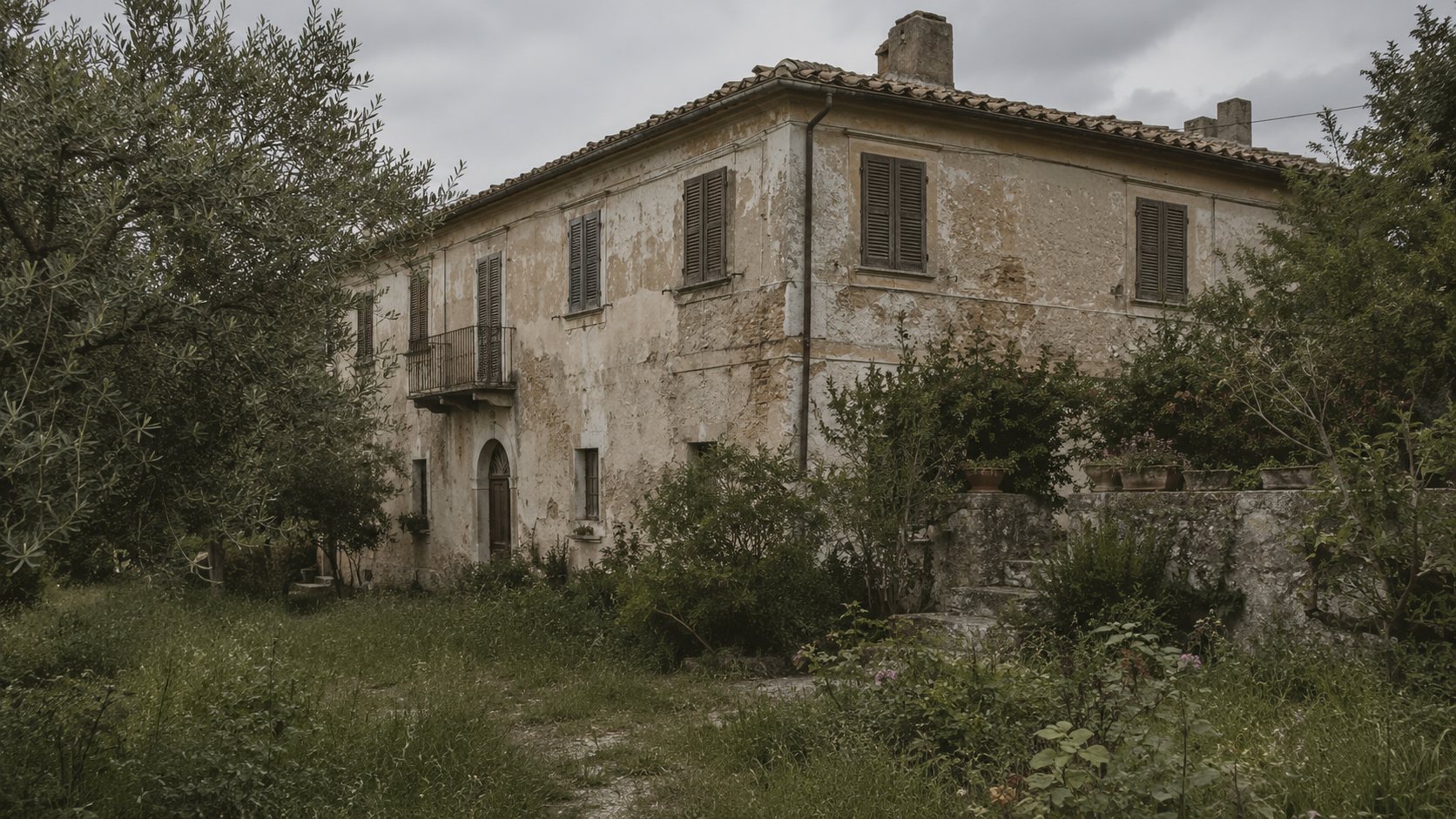
An illustrative, anonymised composite based on situations we commonly see. Details are for explanation, not a description of a specific client or property.
A stone farmhouse in the Sicilian hills, olive trees, a view that justifies the photographs: it is the kind of property that makes a foreign buyer fall quietly in love before the first phone call. The person showing it spoke of it as the family home, "ours" since his grandfather's day. The price was gentle, the welcome warm. Our client, a couple from the United States, were ready to make a proposta di acquisto within the week. They asked us to take a calm look first. That look is why they still have their deposit.
THE CASE AT A GLANCE
- Property: A rural farmhouse with land in inland Sicily, presented by one man as his family home.
- The red flag: The house was not his to sell alone. An old, incomplete successione had left it owned by many heirs.
- What we did: Pulled the visura, traced the inheritance, and showed that not every owner could, or would, sign.
- Outcome: The buyer paused before paying a caparra against title that could not complete.
The property
On paper, nothing was wrong. The farmhouse was sound, the land genuinely belonged to the family, and the seller was charming and apparently sincere. He had grown up there. He spoke of his grandfather and the harvests as though the place were already, naturally, his to pass on. In the south of Italy, that informal sense of ownership is common and often well meant. It is also, legally, beside the point. What matters is not who feels like the owner, but who is the owner on the public record.
Who actually owns it
Under Italian succession, when someone dies their property does not pass to a single chosen person. It passes to all their heirs together, as comproprietari, each holding a share. Run that forward across two or three generations, with large families and emigration, and a single house quietly multiplies its owners. A grandfather's home divides among his children; when one of them dies, that share splits again among their children, and so on.
Here, the grandfather's successione had been handled long ago, but the next ones never were. Several heirs had since died without their own successione being registered. Others had emigrated, to Germany, to Argentina, and were untraceable to the seller. The man presenting the house owned a genuine share. He did not own the house. Until every successione is properly registered and every living heir identified, no one can hand over clear title, however confidently they speak.
What we flagged
Our role is to read the public record and ask the awkward questions early, in plain English, so a buyer understands what they are walking into. The formal legal work, drafting, certifying and completing, belongs to licensed local professionals (the notaio and an avvocato). What we did was practical:
- Pulled the visura at the catasto to list every registered owner, rather than taking the seller's word.
- Traced the chain of inheritance back through the family to see how the shares had fragmented.
- Checked whether each successione in that chain had actually been registered, and found several that had not.
- Asked the only question that decides the deal: can every owner, or a valid representative, realistically be brought to sign?
- Warned, clearly, against paying a caparra to someone who cannot yet deliver clear title.
What it meant for the buyer
Deals like this rarely end in a dramatic refusal. They drift. A missing heir is "being contacted", a cousin abroad is "almost certainly fine with it", a death certificate is "on its way". Months pass. Sometimes the family does manage to gather everyone and complete; often the deal quietly collapses once the cost and effort of tracing and reconciling all the heirs becomes clear. The real danger for a foreign buyer is paying a deposit against a sale that the seller is in no position to complete, then waiting, with their money committed and the property still owned by people who have never agreed to sell.
The lesson
A warm seller and a true family story are not the same as clear title. In rural Italy especially, the gap between who feels like the owner and who is the owner can be wide, and it is invisible from the photographs. None of this means the property was a bad one or the seller dishonest. It means the ownership had to be untangled before any money changed hands, and that untangling can take a long time or prove impossible.
The takeaway
If a property is being sold by one person but has passed down through a family, assume nothing about who must sign until the record says so. The information exists, in the visura and the successione filings, and it is far cheaper to read it before you commit than to chase it afterwards. That is the whole case for a buyer-side check before you sign: a calm look at who really owns the place, while you still have every option open.