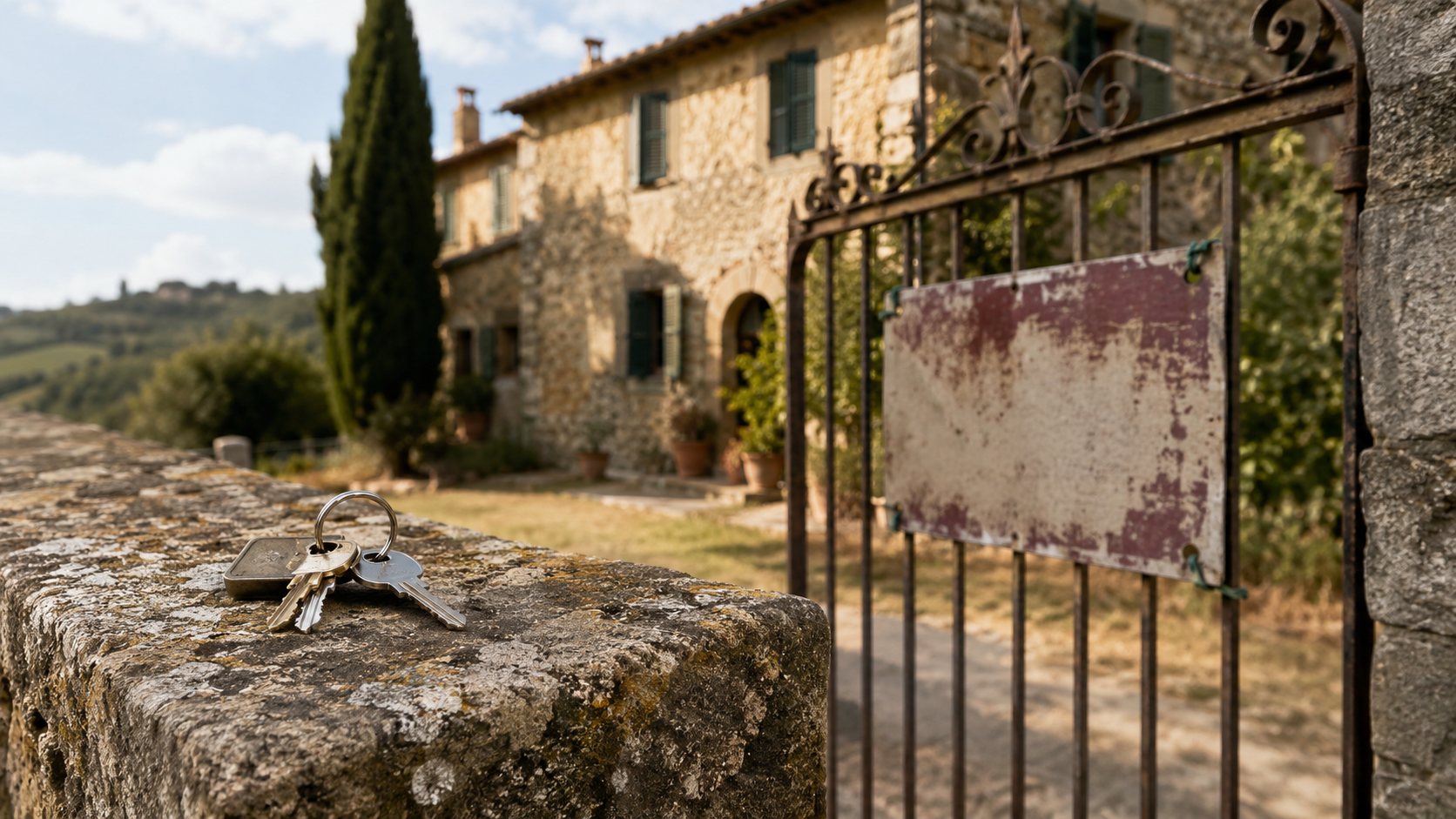
An illustrative, anonymised composite based on situations we commonly see. Details are for explanation, not a description of a specific client or property.
A buyer had found a stone farmhouse in the hills, viewed it twice, and fallen for it. The agente immobiliare was warm, helpful and quietly insistent: another party was interested, the owner wanted to move quickly, and the way to secure the house was to sign the proposta di acquisto that afternoon and transfer a caparra the same week. A short document was already drafted, a deposit figure was already filled in, and the buyer was being encouraged to sign before flying home. It felt less like a negotiation than a formality. The buyer asked us to look at the paperwork before signing.
THE CASE AT A GLANCE
- Property: a rural stone farmhouse, bought to restore and use part of the year
- The red flag: a binding proposta di acquisto with a substantial caparra, drafted with no protective conditions for title, planning, survey or mortgage
- What we did: read the proposal line by line, explained what it would commit them to, and set out the protections to seek before signing
- Outcome: the buyer paused, asked a local professional to revise the wording, and did not put the deposit at risk on an unchecked house
The offer on the table
The document in front of the buyer looked modest: a page or two, a price, a deposit, a date. In Italy that brevity is misleading. A proposta di acquisto is not a polite expression of interest. It is an offer that, on certain terms, can become a real commitment. The version here named a caparra confirmatoria, set a figure for it, and said nothing at all about what would happen if the title turned out to be unclear, if the works on the building had never been properly authorised, or if the buyer's mortgage did not come through.
What the proposta really does
Once a seller accepts a proposta di acquisto, the buyer is generally bound to proceed, often through a compromesso and on to the deed before the notaio. The deposit is central to this. A caparra confirmatoria is not a token held in good faith: if the buyer walks away without a valid reason, it can be kept by the seller, and walking away can have further consequences. There is no quiet cooling-off period to fall back on.
It also matters whose side everyone is on. The agente immobiliare is typically engaged by, and paid in connection with, the sale, and is motivated to close it. A friendly agent is not a dishonest one, but their interest is in a signature, not in slowing things down so a foreign buyer can verify the house. Nobody in that room was being paid to protect the buyer.
What we flagged
Our role was to make the document legible and to point out where the buyer was exposed, so they could take proper advice with their eyes open. The formal drafting and legal work belongs to licensed local professionals; what we offered was clarity before commitment. We flagged the following:
- Read the proposta line by line before signing, and treat nothing as a formality, especially the figures and dates.
- Insert protective conditions (condizioni sospensive) so the offer only becomes binding once clean title, planning and building compliance, a survey and any mortgage are confirmed.
- Define exactly what happens to the caparra if a condition is not met: it should be returnable, in full, with the mechanism written down.
- Do not pay a deposit before the key checks have at least been started; a transfer is far harder to unwind than a signature.
- Have a notaio or avvocato review the wording before anyone signs or pays.
What it meant for the buyer
Stripped of its warmth, the offer asked the buyer to commit a real sum and accept an obligation to buy before a single fact about the house had been verified. If the title carried an old charge, if a barn conversion had never been authorised, if the mortgage fell short, the buyer could have found themselves bound to a purchase they no longer wanted, with the deposit difficult to recover. The exposure sat entirely before the checks, which is precisely the wrong way round.
The lesson
The most expensive moment in an Italian purchase is often the quietest one: a short page signed at the end of a good afternoon. The proposta di acquisto and the caparra are where commitment really begins, and conditions are far easier to negotiate before a signature than to claw back afterwards. Pressure to sign quickly is not a reason to sign quickly. You can find a fuller explanation in our note on the proposta d'acquisto.
The takeaway
Falling for a house is not the problem; signing for it before you understand what the document does can be. A calm reading of the paperwork, the right protective conditions, and a clear answer on what happens to your deposit can turn a risky page into a fair one. If you are being asked to sign a proposal and pay a deposit, consider a buyer-side check before you sign.