
Buying property in Umbria, with your eyes open.
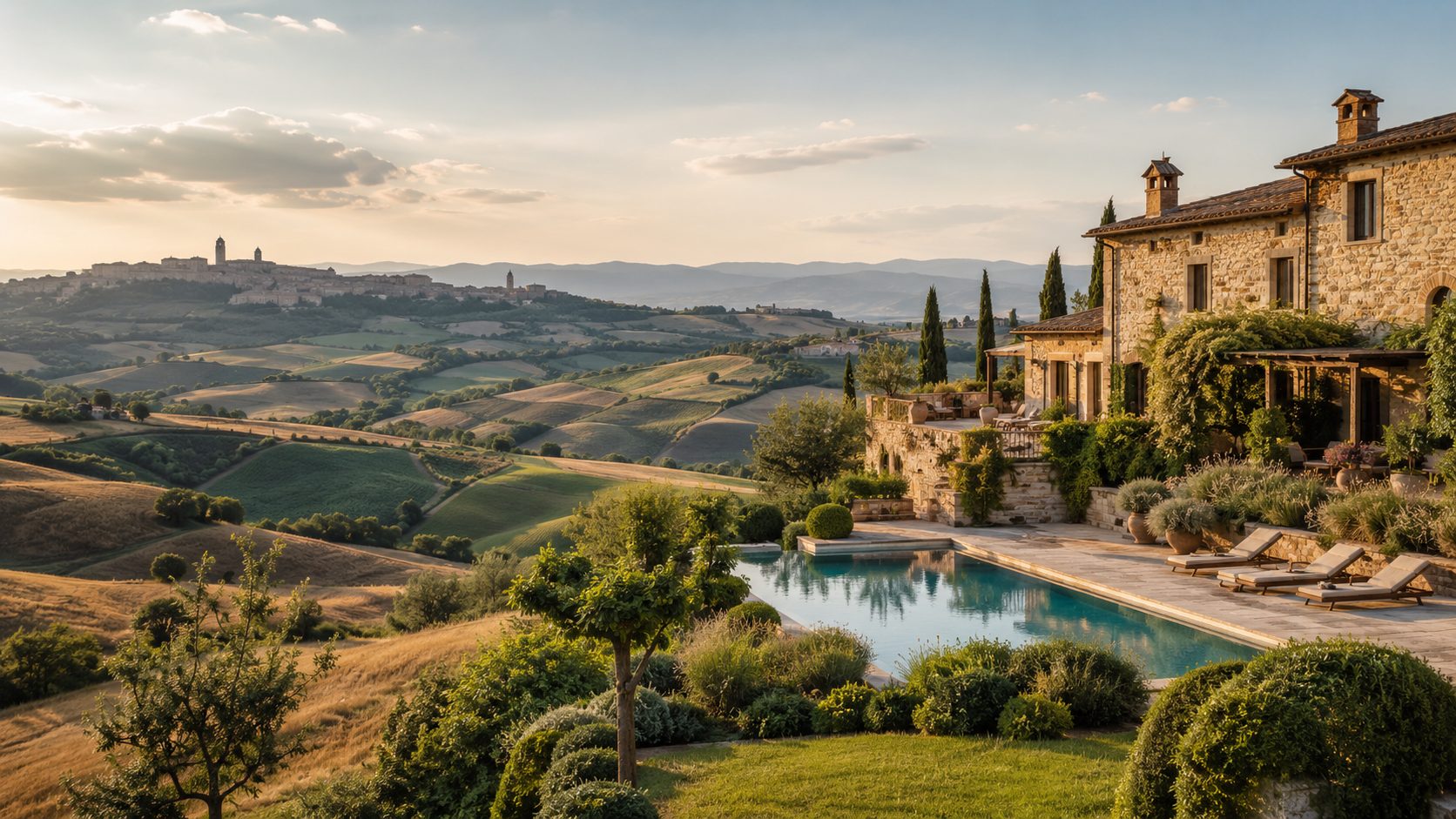
Umbria is the quieter, cheaper neighbour to Tuscany: medieval hill towns, olive groves and no coastline. Buyers come for authenticity and value, but landlocked rural Italy has its own checklist, isolation, restoration, water and seismic history among it.
The Umbria-specific risks
- Rural isolation: many properties are genuinely remote, with winter access, services and connectivity to verify before you romanticise the quiet.
- Restoration of old stone: casali and farmhouses with the same budget traps as Tuscany, often on tighter local trades.
- Water and land: wells, springs, olive groves and the access rights that come with rural parcels.
- Seismic history: parts of Umbria sit in active seismic zones, so structural condition and past repairs matter.
- Heritage constraints in historic centres, which limit what can be changed.
Why buyers choose Umbria over Tuscany
You typically get more house and land for the money, and a less touristy feel. The trade-off is fewer international services, no coast, and quieter resale demand. We give you the honest version of both sides before you commit.
Living in Umbria, not just visiting
Before it is a property decision, a move is a decision about daily life. These are the questions we help you answer about Umbria honestly and year-round, not just how it looks in summer:
- Off-season: genuinely quiet and often foggy in the valleys through winter; this is Italy's green heart, not a resort.
- Access: no major airport of its own, so most buyers fly into Rome or Florence and drive in (around two hours).
- Driving: a car is essential, and hill towns like Perugia, Orvieto and Assisi have ZTL-restricted centres.
- Services: Perugia has the main hospital and university; smaller comuni have limited services out of season.
- Full-time vs second home: Perugia, Spoleto and Todi work year-round; remote farmhouses suit second-home use.
Still deciding where to live? A free Scalini assessment takes you by the hand: a step-by-step, custom Italy Move Plan and a shortlist of the places that truly fit, so you settle in the right spot before you buy.
Frequently asked questions
Can foreigners buy property in Umbria?
Yes. There is no general restriction on US or UK buyers purchasing in Umbria. Ownership and the right to live in Italy are separate matters, so plan the visa question independently of the purchase.
How is buying in Umbria different from Tuscany?
Umbria offers a very similar landscape, stone farmhouses and hill towns, usually at lower prices and with a quieter market. The checks are the same, though: catasto accuracy, planning history, and whether the land and access are genuinely included.
Are rural Umbrian houses connected to mains services?
Do not assume so. Many country properties rely on wells, private water, septic systems or shared tracks rather than mains water, sewerage and a legal road. Confirm utilities and a registered right of way (servitù di passaggio) before you commit.
Is earthquake risk a concern in Umbria?
Parts of Umbria are in seismic zones and felt the 1997 and 2016 quakes. It is not a reason to avoid the region, but structural condition and any history of repairs are worth checking, alongside whether the building has valid habitability (agibilità).
Found a property? Let's check it before you commit.
Share the listing and we'll tell you which level of check fits, from a 390 euro Property Check upward.
 ScaliniPRIVATE RELOCATION OFFICE