
REGIONS
Buying property in Sicily: beyond the one-euro house
The one-euro reality, where the real value sits, and the title, planning and inheritance issues that are unusually common in Sicily.
By the Scalini Group team | 26 Jun 2026 | 13 min read
REGIONS
The one-euro reality, where the real value sits, and the title, planning and inheritance issues that are unusually common in Sicily.
By the Scalini Group team | 26 Jun 2026 | 13 min read
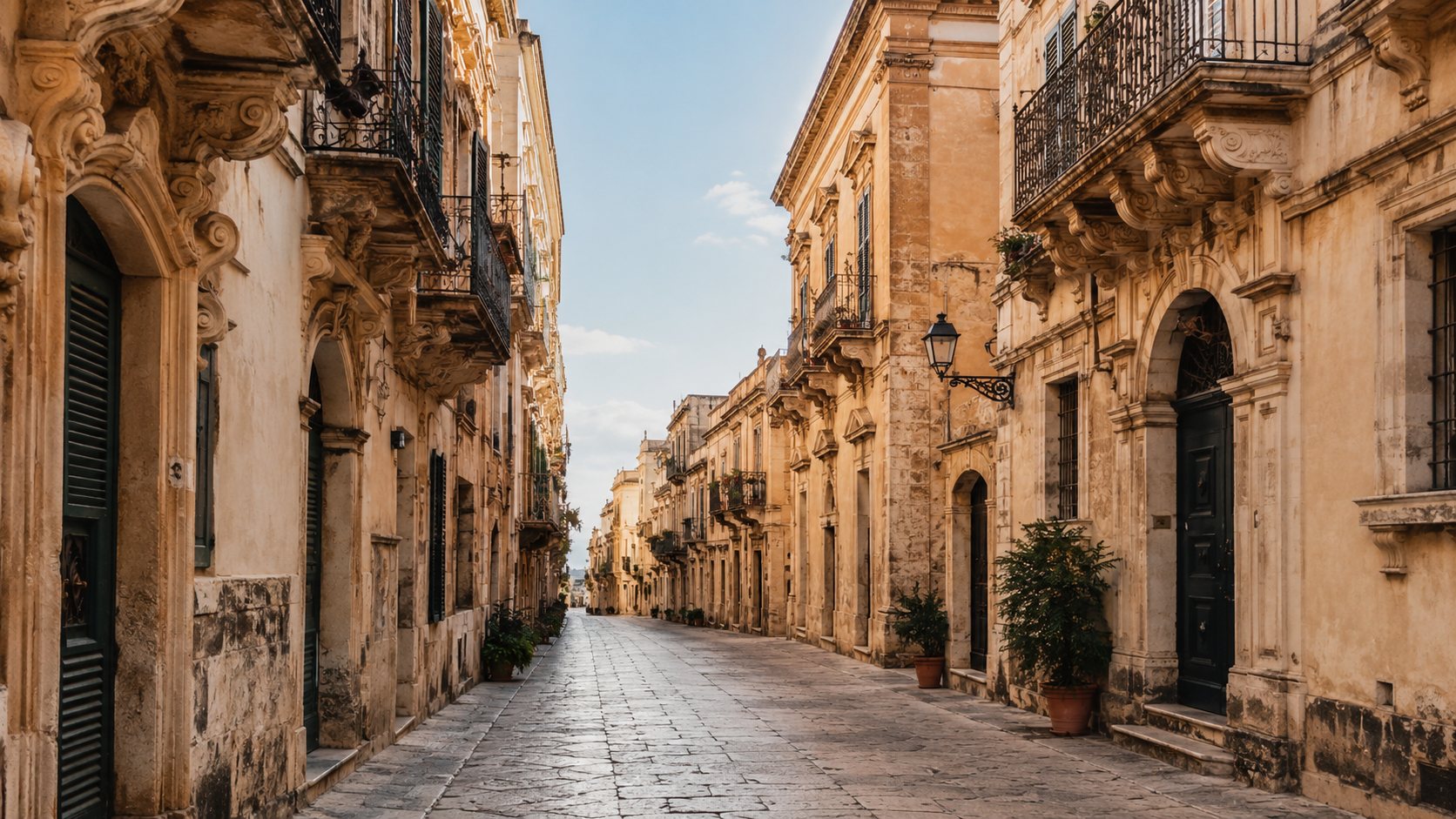
Sicily is the part of Italy most likely to start with a fantasy and end with a spreadsheet. The headlines are seductive: a townhouse for one euro, a baroque palazzo for the price of a city car. Some of those deals are real. Almost none of them are simple. Before you fall for a price, it helps to understand how property actually changes hands here, where the genuine value sits, and which problems are so common in Sicily that you should assume they exist until someone proves otherwise. This guide is an honest overview for foreign buyers, and the starting point for buying property in Sicily with your eyes open.
WHAT TO CHECK FIRST
The one-euro house is a real municipal initiative used by several Sicilian towns to repopulate depopulated historic centres. The price is genuine, but it is a marketing figure, not the cost. These schemes come with binding conditions, and you should read them before you book a flight.
The renovation is the real number. A full restoration of a small stone house in a historic centre can run into the tens of thousands of euros and often well beyond, especially where access for materials is difficult or the building shares walls with neighbours. Many "one euro" listings are also not strictly one euro: a large parallel market exists of low-cost houses (a few thousand to a few tens of thousands) with fewer strings, which can be better value than a euro plus a deadline. Either way, treat the headline as the deposit on a much larger commitment.
Most foreign buyers who are happy long term did not buy the cheapest thing they could find. They bought somewhere they understood. Sicily is large and the sub-markets behave very differently.
Ortigia and Syracuse: the island core of Ortigia is one of the most sought-after addresses on the island, with restored apartments commanding strong prices and limited supply. Noto and the baroque south-east: Noto, Modica, Ragusa Ibla and Scicli draw buyers who want UNESCO-grade architecture and a settled international community; prices reflect that. The coast: sea-view and beach properties carry a premium and need extra scrutiny on coastal building rules and any structures built close to the shoreline. Palermo: a real city with a real economy, where you can find grand apartments at urban prices, alongside buildings that need serious work. The west (Trapani, Marsala, the Egadi hinterland): often quieter and cheaper, with rural and small-town stock where access and utilities matter most.
This is the single biggest practical risk in Sicily. An abuso edilizio is building work done without the correct permits, or differently from what was approved: an enclosed terrace, an extra room, a converted outbuilding, a roof raised at some point in the last fifty years. It is extremely common, particularly in rural areas and older town stock. Unpermitted work can sometimes be regularised (a sanatoria), but not always, and the cost and feasibility vary case by case. Buying a property with an unresolved abuso can mean you inherit the problem, including the risk that it cannot be sold on or mortgaged later. You should never rely on the seller's assurance that "everything is fine". This needs a technical comparison of the permitted plans against the building as it stands today.
The catasto (land registry) records each property's plan, category and notional value. In Sicily it is common for the registered plan to differ from the actual layout, which is often a symptom of the planning issues above. A mismatch is not automatically fatal, but it must be understood and, where needed, corrected before completion. Separately, check for agibilità (the habitability certificate confirming the building is fit to live in). Many old and rural properties have never had one, or have one that no longer matches the current structure. Without it, a property can still be bought, but financing, insuring, and legally letting it can all become harder.
Sicilian title is frequently fragmented. Under Italian succession rules, a property passes to all heirs, and over a couple of generations a single farmhouse can end up owned by a dozen cousins, some abroad, some deceased, some who have never agreed on anything. To sell cleanly, every owner generally has to sign, and the chain of inheritance (the successione) has to be properly registered. If it is not, you may be buying from someone who cannot actually deliver clear title. This is a leading cause of deals that drift for months or quietly collapse, and it is worth confirming early.
For country properties, two unglamorous questions decide whether a place is livable. First, access: is there a legal right of way to a public road, in writing, or do you cross a neighbour's land on goodwill alone? Second, utilities: mains water, electricity, and legal drainage cannot be assumed in rural Sicily. Some homes rely on wells, water deliveries, or septic systems that may or may not be compliant. Then there is distance. Sicily has three useful airports: Catania (handiest for Syracuse, Noto and the south-east), Palermo (for the city and the north-west), and Comiso (smaller, near Ragusa). A "two hours from an airport" property is a different proposition for holiday lets and for resale than one twenty minutes away.
Many small southern towns, including a good number in Sicily, qualify for a scheme that lets new foreign-pension residents pay a 7% flat tax on foreign income for a number of years, provided they move their tax residence to a qualifying town. It is a genuine incentive and a real reason some retirees choose Sicily, but it depends on the specific town's eligibility and on you actually relocating. It is covered in more detail in our guide to Italy's 7% flat tax for retirees. The broader point holds across everything above: the cheap headline almost always hides the real cost, whether that is renovation, regularisation, unwinding inheritance, or simply distance. Going in with a clear total budget, and an independent buyer-side check before you commit, is what separates a good Sicilian purchase from an expensive lesson.
Sometimes, if you genuinely want the renovation project and can fund it. The euro is the easy part; the binding deadline, the deposit you can lose, and a restoration that often runs to tens of thousands are the real commitment. For many buyers a slightly more expensive house in better condition is cheaper overall.
Common, and serious if ignored. Some can be regularised and some cannot, and the difference affects whether you can later sell, mortgage or insure. The safe assumption in Sicily is that older and rural properties may have unpermitted work until a technician confirms otherwise.
Yes. The scheme requires you to transfer your tax residence to a qualifying town and meet the conditions; it is not a discount you claim from abroad. Confirm a specific town's eligibility and the current rules before you rely on it.
Contact us and we'll tell you which level of check is most suitable. Independent, buyer-side, no commission from the sale.
Contact us ScaliniPRIVATE RELOCATION OFFICE