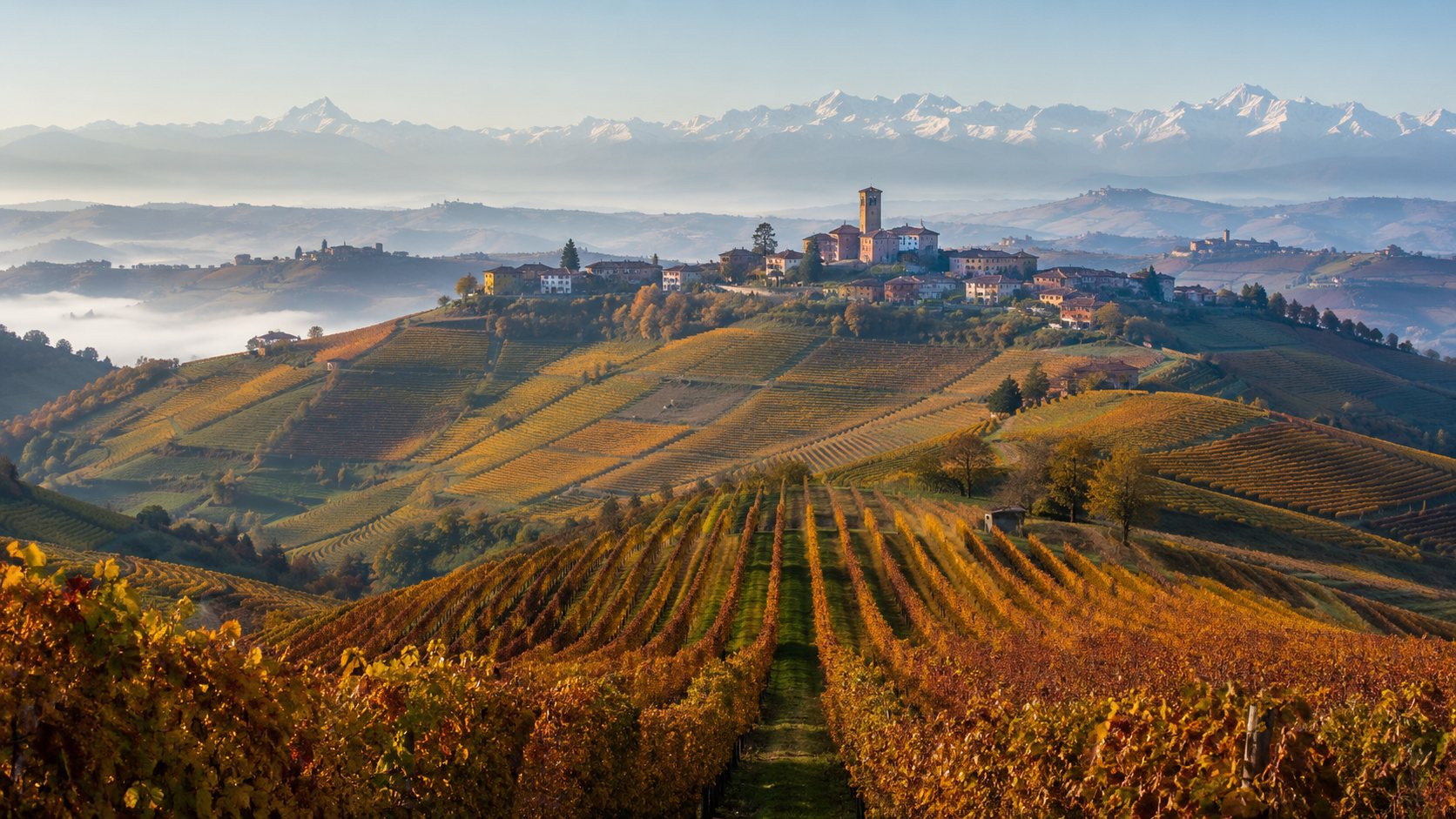
Piedmont rewards patience. It is one of Italy's quietest regions to fall for, and one of its most layered when it comes to ownership: rolling vineyard hills, two understated lakes and a wall of Alpine valleys, each with its own rules and its own risks. This guide covers what makes buying property in Piedmont different from buying in Tuscany or on the Amalfi Coast, and where foreign buyers most often need an independent eye.
WHAT TO CHECK FIRST
- Pre-emption rights: confirm whether a tenant farmer or neighbour holds prelazione over vineyard or agricultural land.
- What is included: separate the house from the land, vines, woodland and any farm parcels sold with it.
- Catasto match: check the catasto plans against the building as it actually stands.
- Unpermitted work: look for abuso edilizio in extensions, barns and converted outbuildings.
- Access and utilities: verify road access, a servitù di passaggio if needed, water, power and drainage.
- Habitability: ask whether agibilità exists for every part you intend to live in.
Three regions, not one market
Piedmont is not a single property market. The Langhe and the neighbouring Monferrato are wine country: UNESCO-listed hills of Barolo, Barbaresco and Asti, dotted with stone farmhouses and small towns like Alba and Asti. Prices here have climbed steadily as the wine reputation has grown, but the stock is rural and often agricultural in character. The lakes, Maggiore and the smaller Orta, sit to the north toward the Swiss border, with grand villas, lakefront villages and a different, more residential rhythm. And the Alpine valleys west and north of Turin (the Susa and Chisone valleys, the area around the Olympic resorts) are mountain country, with chalets, old village houses and ski-season demand. What you check, and who you need, varies sharply between the three.
Wine country: land carries strings
The single most important Piedmont-specific point concerns agricultural and vineyard land. In wine country the house and the land are often legally distinct, and the land can carry rights that the listing photographs never mention. Where land is farmed under a tenancy, the tenant farmer may hold prelazione, a right of first refusal that lets them match your offer and buy ahead of you. Neighbouring farmers can hold a similar pre-emption right over adjoining agricultural parcels. There are also rules in Italy about who may own and farm certain agricultural land, and tax treatment differs from residential property.
None of this should put you off. It simply means the question "what exactly am I buying, and what rights attach to it?" has to be answered before you commit, not after. Confirm precisely which parcels are included, whether the vines are leased to a producer, whether anyone holds prelazione, and what the cadastral classification of each parcel is. This is exactly the kind of detail that an independent buyer-side check exists to surface, separately from the agent who is paid to close the sale.
The cascina: romance, then reality
A restored cascina, the classic Piedmont farmhouse, is what draws many buyers to the Langhe. Restoration is rewarding and many are beautifully done, but utilities and access are not guaranteed in the way they are in town. A rural property may rely on a private water source, a septic system rather than mains drainage, and a track rather than an adopted road. Where the only access crosses a neighbour's land, you need a registered servitù di passaggio, not a friendly verbal arrangement. Check that mains power is adequate for the renovation you have in mind, and that any past work was permitted.
That last point matters everywhere in rural Italy. Old farmhouses accumulate barns, lean-tos and converted spaces over decades, and not all of it was declared. Abuso edilizio, unpermitted building work, can block a sale, complicate financing, or land in your lap as the new owner. The plans held at the catasto should match the building as it stands today; where they do not, you want to understand why, and whether it can be regularised, before the deed.
Agibilità and the paper trail
Rural and older properties do not always have current agibilità, the certificate that a space is fit to be lived in, for every part of the structure. A wing converted years ago, or an outbuilding turned into guest rooms, may sit outside the formal record. This is not necessarily a deal-breaker, but it is something to establish early, because resolving it can take time and money. Assembling and reading this paper trail is work for an independent professional, and Scalini draws on a trusted network of independent Italian professionals who answer to the buyer rather than the sale.
Lakeside: concessions and constraints, in brief
Lake Maggiore and Lake Orta have their own layer. Lakefront access, moorings and any structures over or beside the water often depend on a public concession rather than outright ownership, so confirm what is genuinely yours and what is licensed. These shorelines also sit under landscape protection (vincolo paesaggistico), which constrains what you may alter externally. Expect more scrutiny on changes to façades, roofs and gardens than you would inland, and budget time for the relevant approvals.
An understated market, and getting there
Piedmont is less touristy than Tuscany or the Lakes proper around Como, and that cuts both ways. Towns feel lived-in and Italian rather than seasonal, the food and wine culture is serious, and prices outside the very top Barolo addresses tend to be calmer. The trade-off is a thinner resale and rental market in some areas, so buy because you want to be there, not on the assumption of quick capital growth. Access is genuinely good: Turin has its own airport, Milan Malpensa is within reach of the lakes and the wine hills, and Italy's fast rail network connects Turin and Milan to the rest of the country. For a clear view of what the whole transaction costs beyond the headline price, our guide to the real cost of buying in Italy is worth reading alongside this one.
Frequently asked questions
Can a foreigner buy a vineyard in Piedmont?
In general, yes. Foreign buyers from the US and UK can own property and land in Italy. The complications with vineyards are not about nationality but about the land itself: pre-emption rights such as prelazione, who is entitled to farm it, and how it is classified and taxed. Establish those points before committing.
What is prelazione and does it affect my purchase?
It is a right of first refusal. Where agricultural land is leased to a tenant farmer, or borders another farmer's land, that person may have the right to buy at the price you have agreed, ahead of you. It does not always apply, but on rural and vineyard sales it should always be checked rather than assumed away.
Are the Alpine valleys a good place to buy?
They can be, for mountain living and skiing near Turin. The checks shift toward condition, heating, snow load and seasonal access, and toward demand that is tied to the ski season. As anywhere in Piedmont, confirm the catasto position and that any past work was permitted before you proceed.
Sources & further reading