
REGIONS
Buying a Tuscan farmhouse: the checks that matter most
Restoration costs, planning, catasto, land and access: the questions that decide whether a stone casale is a dream or a money pit.
By the Scalini Group team | 28 Jun 2026 | 12 min read
REGIONS
Restoration costs, planning, catasto, land and access: the questions that decide whether a stone casale is a dream or a money pit.
By the Scalini Group team | 28 Jun 2026 | 12 min read
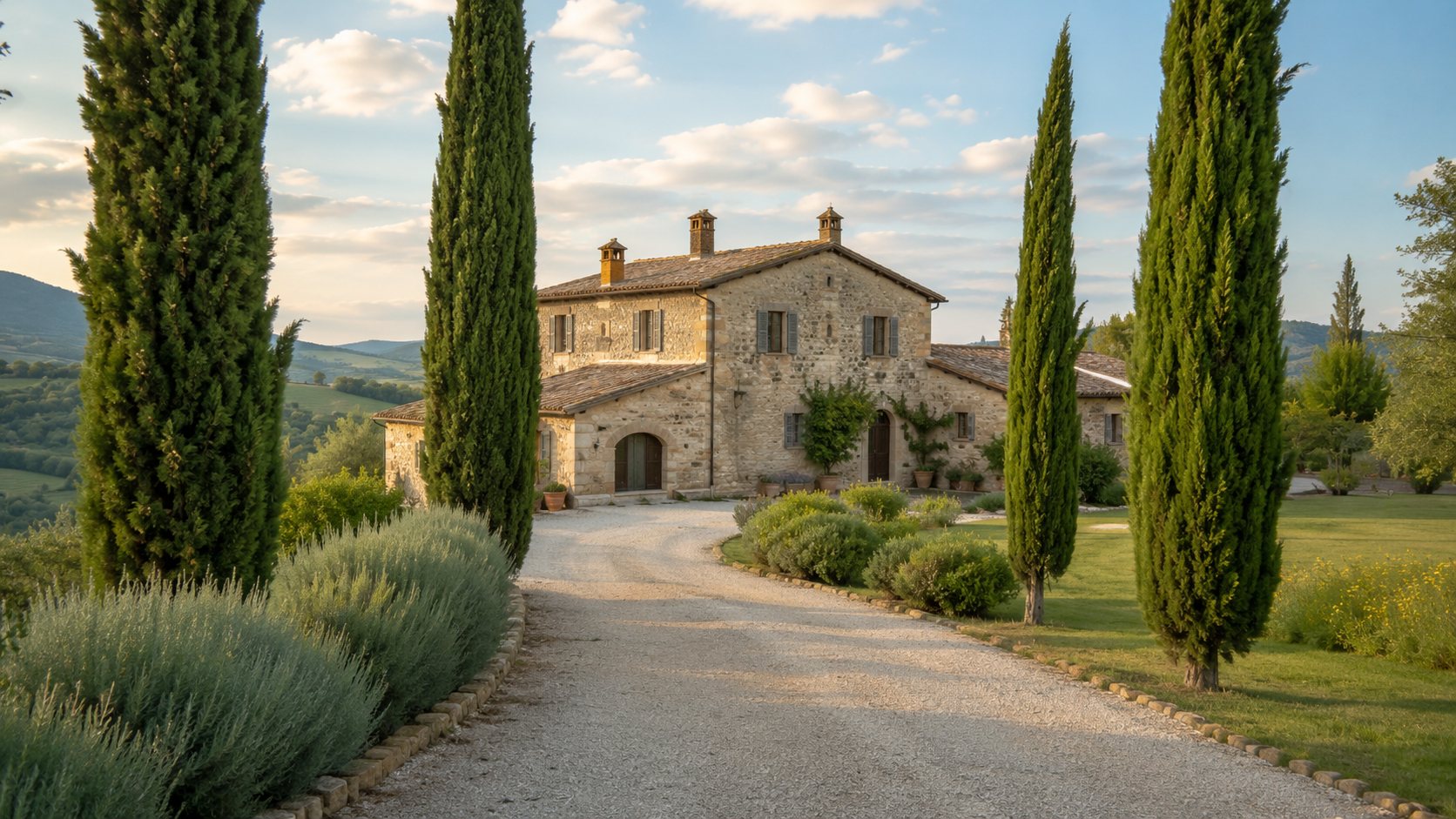
A stone farmhouse in the Tuscan hills is one of the most photographed dreams in Italian property, and one of the easiest to misjudge from a listing alone. The photographs sell a restored idyll; the reality may be a building with decades of informal alterations, an uncertain water supply and a long restoration ahead. The point of this guide is not to discourage you, but to show you where the real questions sit, so that the gap between the romance and a sound purchase is something you choose with open eyes rather than discover after the rogito (the final deed).
WHAT TO CHECK FIRST
Most rural Tuscan stone houses sold to foreign buyers fall into one of two camps: already restored to a high standard and priced accordingly, or characterful but needing significant work. The trap is the middle listing that looks finished in photographs but hides old wiring, damp in thick stone walls, an undersized septic system or a roof near the end of its life. Restoration in a rural setting is rarely quick or cheap, and costs are hard to predict until someone has opened up the building.
Before you fall for a price, get a realistic sense of what bringing the house to your standard would cost. A few things consistently drive the budget:
This is where a calm, independent read of the property pays for itself. Our guide to buying property in Tuscany sets out the wider process; for a specific house, a surveyor (geometra or architetto) should price the works.
An abuso edilizio is a building work done without the right permission, or differently from what was approved. On old rural buildings altered repeatedly over the years, small discrepancies are common: an enclosed loggia, a converted barn, an extra bathroom, a raised roofline. Some can be regularised (sanatoria); some cannot. An unresolved abuso can hold up the sale, reduce value, or leave you responsible for putting it right.
The seller's tecnico should confirm that the building is conforme, meaning what stands matches the permits and the registered plans. You want that confirmation in writing before money is committed, not a verbal reassurance that everything is fine.
The catasto is the land and buildings registry. It is primarily a tax and identification record, and its drawings do not always reflect what has actually been built. With farmhouses it is normal to find the registered floor plan showing fewer rooms, a different layout, or outbuildings not recorded at all. A mismatch is a flag that work was done without updating the records, which loops back to the planning question above. Have someone walk the house with the catasto plan in hand and note every difference.
With a casale or podere you are often buying land as well as a house, and the boundary of the sale is not always what the photographs imply. The olive grove on the hillside, the woodland, the second barn, the strip along the lane: each is a separate parcel (particella) in the registry, and each may or may not be included. Confirm exactly which parcels are in the deal and have them shown on a map.
Many Tuscan farmhouses sit at the end of an unpaved strada bianca (white road) that may be private, shared, or cross land you do not own. A servitù is a right over someone else's property: a right of way to reach your house, or someone else's right to cross yours. These rights, and the duty to maintain a shared track, should be set out in the deeds. Romantic isolation is wonderful until you learn the only legal access runs through a neighbour's olive grove on uncertain terms.
Establish how you reach the house in law, who maintains the road, and whether any servitù burdens or benefits the property. A notary (notaio) checks the title; an independent eye helps you ask the right questions first.
Rural homes are frequently off the mains. Water may come from a private well (pozzo), a spring, a shared supply, or a collection cistern. Each raises its own questions: is the well legally registered and authorised, is supply reliable in a dry summer, is the water tested and drinkable, and who else draws from a shared source. Treat water as a core check, not a detail, and ask for documentation rather than assurances.
Much of the Tuscan countryside sits under a vincolo paesaggistico, a landscape protection that governs what you may change to the exterior, the roofline, materials and even some planting. Buildings of historic interest can carry a separate heritage tie. None of this need stop a purchase, but it shapes what you can do: a swimming pool, new openings, solar panels or an extension may need extra consent or may not be permitted at all. If your plans depend on changing the building, confirm what the constraints allow before you commit.
The restored-farmhouse market in Tuscany is mature and premium. Good properties hold their value and attract international interest, so you are competing in a market that knows what it has. That is an argument for diligence rather than haste: pay for what is genuinely there, and price in the work and constraints that the listing glosses over. On access, the practical gateways are Florence and Pisa airports, with Florence handy for the Chianti and the eastern hills and Pisa for the coast and the south and west.
The sensible sequence is steady rather than rushed:
Before any of that becomes a commitment, an independent buyer-side check gives you a second opinion on what to verify and who should verify it, and we can point you to trusted local professionals for the parts that need a licensed eye.
No. Each field, grove and outbuilding is a separate parcel in the registry and may or may not be in the sale. Always confirm exactly which parcels are included and have them shown on a map before you assume the view in the photographs comes with the house.
It is common and not always serious, but it should be explained. A mismatch usually means work was done without updating the records, which raises the question of whether it was properly permitted. Ask the seller's tecnico to confirm the building is conforming before you proceed.
Not necessarily. A vincolo paesaggistico or heritage constraint can limit changes to the building and grounds, and some works need extra consent. If your purchase depends on a specific addition, confirm it is permitted before you commit rather than after.
Contact us and we'll tell you which level of check is most suitable. Independent, buyer-side, no commission from the sale.
Contact us ScaliniPRIVATE RELOCATION OFFICE